Nordic barley porridge
July 22, 2026 · 3 min read
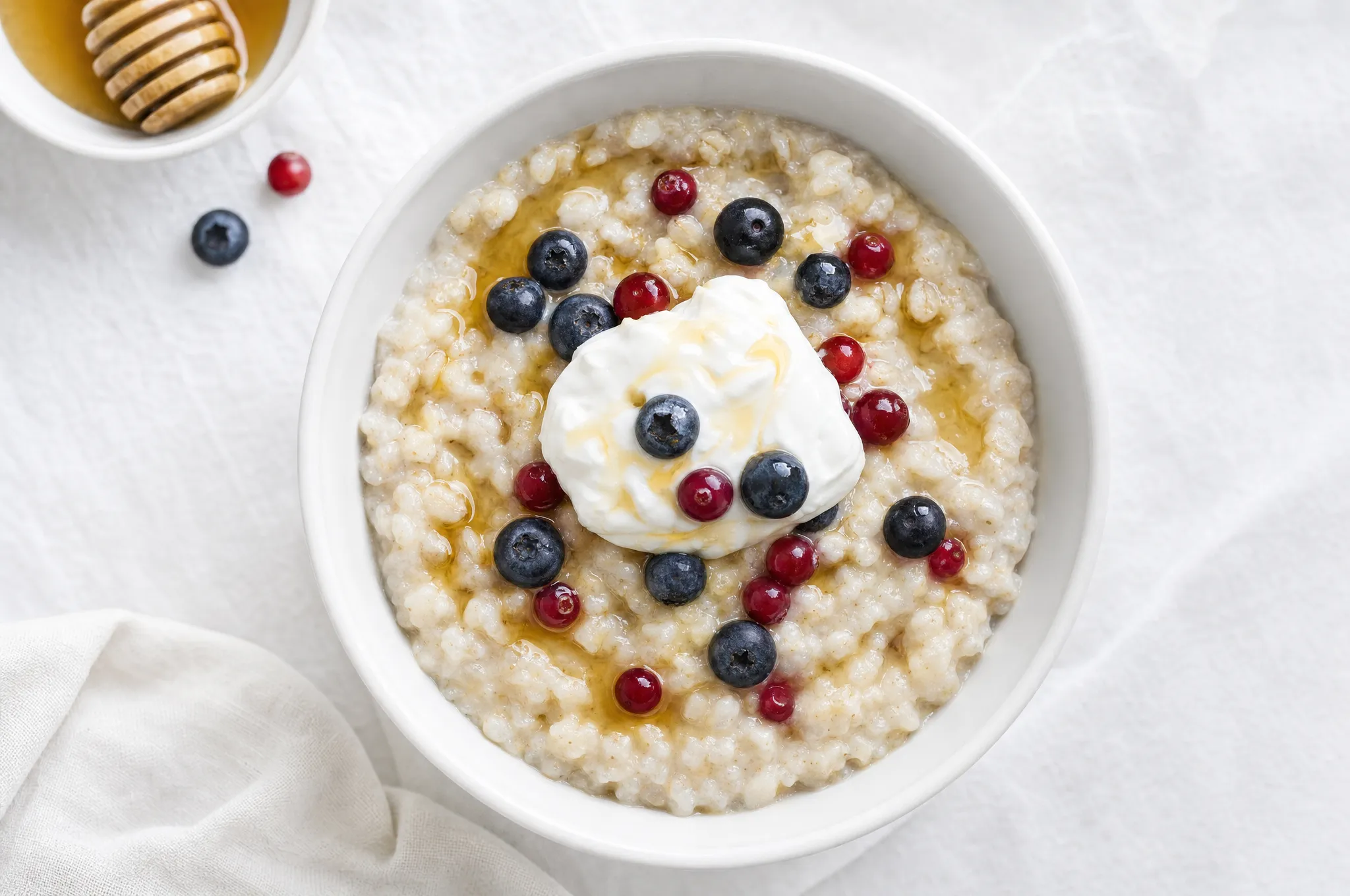
Barley porridge is the slower, more satisfying alternative to oatmeal — thick and creamy from the grain's natural starch, with a mild earthiness and a chew that oats don't quite match. It takes 35 minutes instead of 5, which makes it a weekend breakfast or a make-ahead situation, not a Tuesday morning scramble. But for a meal that holds you until early afternoon, it's worth the time.
Pearl barley has a lower glycemic index than rolled oats, largely because of how its beta-glucan fiber is structured — it slows the breakdown of starch and blunts the glucose response more than oats do. The same fiber is why the porridge gets so thick: it absorbs water and becomes almost gel-like as it cooks, without any added dairy. If you want to go deeper on what barley brings nutritionally, barley and the Nordic diet covers it in detail.
Topped with berries, honey, and a spoon of skyr, you've got whole grains, fruit, and protein in one bowl — three parts of the Nordic pattern before 9am. For comparison on the grain side, Nordic oats is the faster weekday version; Nordic overnight oats is the no-cook make-ahead route. This one sits between them in effort and above them in staying power.
Ingredients
- 1 cup pearl barley, rinsed
- 4 cups water
- 1/4 teaspoon fine salt
- 1 cup mixed fresh or frozen berries, to serve
- 4 teaspoons honey, to serve
- 1/2 cup plain skyr or plain yogurt, to serve
Steps
- Rinse the pearl barley under cold water and drain.
- Combine the barley, water, and salt in a medium saucepan. Bring to a boil over medium-high heat.
- Reduce heat to low, cover partially, and cook at a gentle simmer for 30–35 minutes, stirring every 5–8 minutes, until the barley is tender and the porridge is thick and creamy. Add a splash of water if it thickens too fast before the barley is cooked through.
- Spoon into bowls. Top each serving with berries, a drizzle of honey, and a spoon of skyr or yogurt.
Notes and swaps
- Frozen berries work as well as fresh and are cheaper year-round — they warm slightly against the hot porridge and release their juice into the bowl.
- Skyr is the traditional protein-rich finish; plain Greek yogurt or kefir are direct substitutes. See what is skyr if you haven't used it.
- For a richer porridge, swap half the water for oat milk or whole milk in the last 10 minutes of cooking.
- Make-ahead: barley porridge thickens considerably as it cools. Refrigerate in portions and reheat with a splash of water or oat milk over low heat, stirring to loosen. It keeps for 4–5 days and reheats well.
- Hulled barley is the more nutritious option (more fiber, intact bran) but takes 45–60 minutes; soak it overnight to bring that down. Pearl barley is the everyday choice.
For more Nordic morning options, see Nordic breakfast ideas.
Tell Nordic Diet Companion "barley porridge with blueberries, honey, and skyr" and it logs the whole grain, berries, and protein — reflecting how the meal fits the day's pattern.
FAQ
Why is barley porridge lower GI than oat porridge? Both contain beta-glucan, but barley's beta-glucan is more concentrated and has a different structural arrangement that slows starch digestion more effectively. Pearl barley's GI is typically in the 25–30 range; rolled oats are usually 55–60.
Can I use a slow cooker? Yes. Combine barley, water, and salt; cook on low for 6–8 hours or high for 3–4 hours. You may need to add water toward the end if it gets too thick. This is a practical way to have porridge ready in the morning.
Does it need to be stirred continuously? No — stir every 5–8 minutes to prevent sticking on the bottom. Occasional stirring is enough; constant stirring isn't required the way it is with risotto.
Is barley porridge gluten-free? No. Barley contains gluten and is not suitable for celiac disease or significant gluten sensitivity. For a gluten-free alternative, the Nordic overnight oats made with certified gluten-free oats is the closest equivalent.