Nordic baked trout with dill
August 8, 2026 · 4 min read
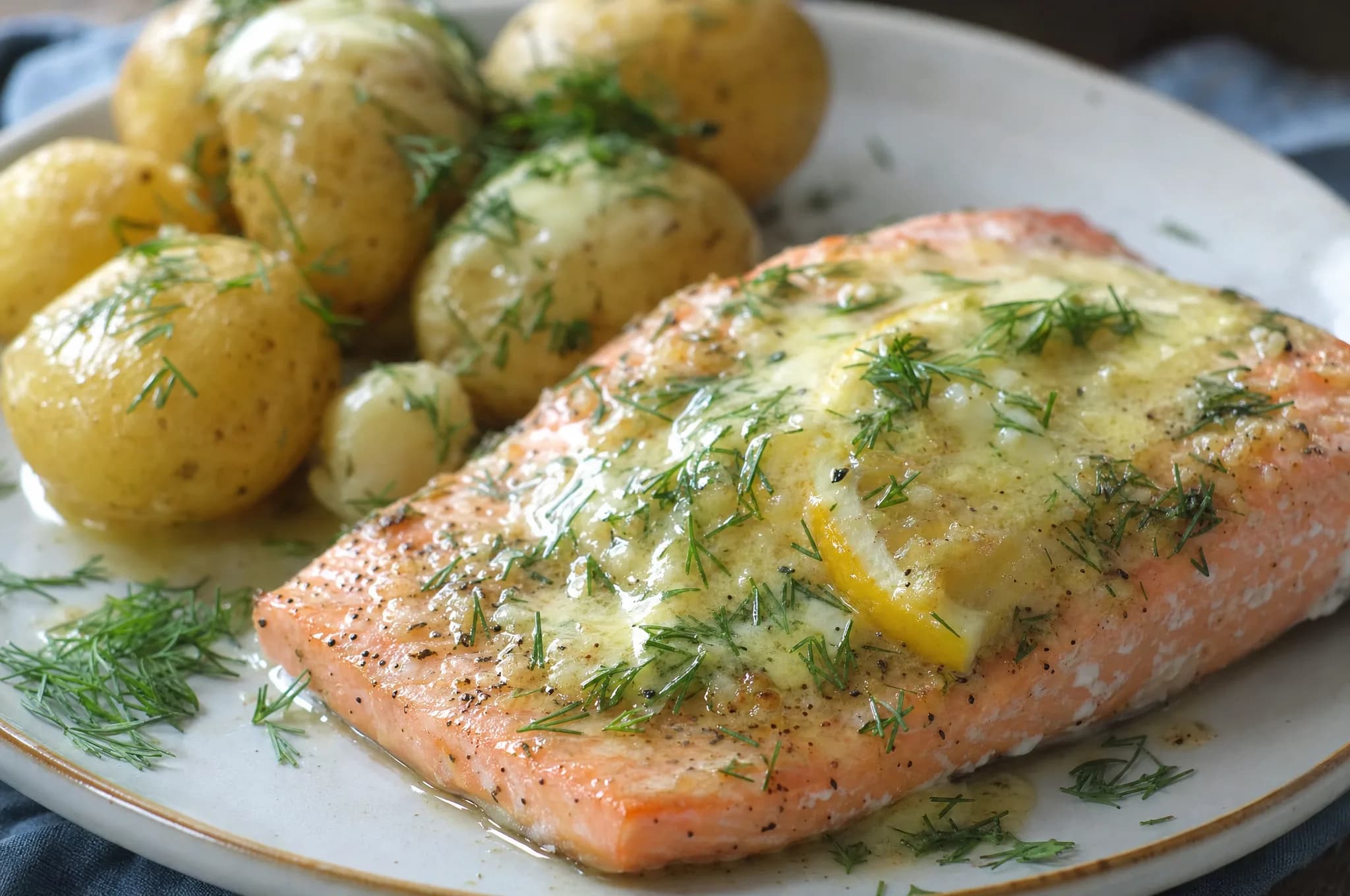
Trout is the fish to reach for when you want salmon's richness at a lighter weight and a milder finish. It bakes in about fifteen minutes, needs nothing more than butter, lemon, garlic, and a handful of dill, and comes out of the oven flaking at the touch of a fork. This is the kind of plate that anchors a Nordic table without any fuss — the fish does the work, the dill carries the scent, and a side of new potatoes or a cool cucumber salad rounds it out.
The one thing worth watching is the timing. Trout is lean, so it moves from just-cooked to dry faster than salmon does. Pull it when the flesh turns opaque and gives way to a fork, and let carryover heat finish the center on the plate.
Butter gives the richest result, but rapeseed oil is the traditional Nordic fat here and keeps the dish lighter. Either one works, and you can split the difference by baking in oil and finishing with a small knob of butter as the fish comes out.
Ingredients
- 4 trout fillets (about 5 oz / 140 g each), skin on
- 2 tablespoons butter, melted, or rapeseed (canola) oil
- 1 tablespoon rapeseed oil, for the pan and drizzle
- 1 lemon: half sliced, half for juice and wedges
- 2 garlic cloves, thinly sliced
- Small bunch fresh dill, roughly chopped (about 3 tablespoons)
- 1/2 teaspoon salt
- 1/4 teaspoon black pepper
- To serve: new potatoes or a cucumber salad
Steps
- Heat the oven to 400°F (200°C). Rub a baking dish or a lined sheet pan with the tablespoon of rapeseed oil. Pat the trout fillets dry and lay them skin-side down, leaving a little space between them.
- Season the fillets with the salt and pepper. Brush the melted butter over the tops, scatter the sliced garlic, and tuck the lemon slices around the fish. Drizzle over a squeeze of lemon juice.
- Bake 12–15 minutes, until the flesh turns opaque and flakes with gentle pressure. Thin fillets need closer to 12 minutes; thicker ones closer to 15.
- Scatter the fresh dill over the hot fish. Serve with lemon wedges and new potatoes or a cucumber salad alongside.
How it comes together
Makes 4 servings — read left to right; each column combines what's behind it.
PrepPat the trout fillets dry and heat the oven to 400°F (200°C) before you start — dry fish browns better and a hot oven keeps the cook short.
| 1 tbsp · 14 g rapeseed oilfor the pan | Oil the pan, heat oven | |||
| 4 trout filletsesskin on, ~140 g each | Lay in fish, season, top | Bake 12–15 min until it flakes | ||
| ½ tsp salt | ||||
| ¼ tsp black pepper | ||||
| 2 tbsp · 28 g buttermelted, or rapeseed oil | ||||
| 2 garlic clovesthinly sliced | ||||
| 1 lemonhalf sliced, half juiced | ||||
| 3 tbsp fresh dillroughly chopped | Finish with dill, serve | |||
| new potatoes or cucumber saladto serve |
Scaling adjusts quantities only — cooking times and pan sizes may need judgment. Grams are rounded for the kitchen.
Notes and swaps
Salmon or Arctic char stand in for trout without changing the method — add a couple of minutes for a thicker salmon fillet. No fresh dill? Chopped chives or parsley shift the flavor but keep it fresh and green; dried dill is a distant third and needs only a pinch. A spoonful of capers or a thin smear of grainy mustard under the butter adds a sharper edge that suits the oily fish.
For a whole-pan dinner, halve some new potatoes, toss them in oil, and give them a 15-minute head start in the oven before the trout goes in. They finish together. Serve with dill potato salad for a cold side, or keep it green with a plain salad and rye bread.
Tell Nordic Diet Companion "baked trout with dill and new potatoes" after dinner and it reflects how the meal fits your week — oily fish a couple of times, whole ingredients, the dill and rapeseed oil that run through Scandinavian cooking. It reads the pattern without asking you to count anything.
FAQ
How do I know when trout is done? The flesh turns from translucent to opaque and flakes when you press it with a fork. At 400°F that takes 12–15 minutes for a standard fillet. Trout is lean, so err on the early side and let it rest a minute — it keeps cooking off the heat.
Butter or rapeseed oil — which is better? Butter gives a richer, browner finish; rapeseed oil is the lighter, traditional Nordic choice and has a higher smoke point. Both work. Baking in oil and finishing with a little butter gives you some of each.
Can I use frozen trout fillets? Yes. Thaw them fully in the fridge and pat them very dry before seasoning, or the fish steams instead of roasting. Frozen fillets can hold more water, so give them the full bake time and check for flaking.
What should I serve with it? New potatoes are the classic pairing, tossed in a little butter and dill. A cucumber salad or a simple green salad keeps it light, and rye bread rounds out a bigger plate. For more ideas, see Nordic meal ideas and the Nordic diet fish guide.
Is trout a good fish for the Nordic diet? Trout is oily fish, which sits at the center of Nordic eating alongside salmon, herring, and mackerel. It brings the same kind of fats these fish are known for, and it takes well to the simple butter-lemon-dill treatment. If you want the full picture of how to read a recipe like this at a glance, see read a recipe at a glance.