Garlicky sautéed greens
August 5, 2026 · 3 min read
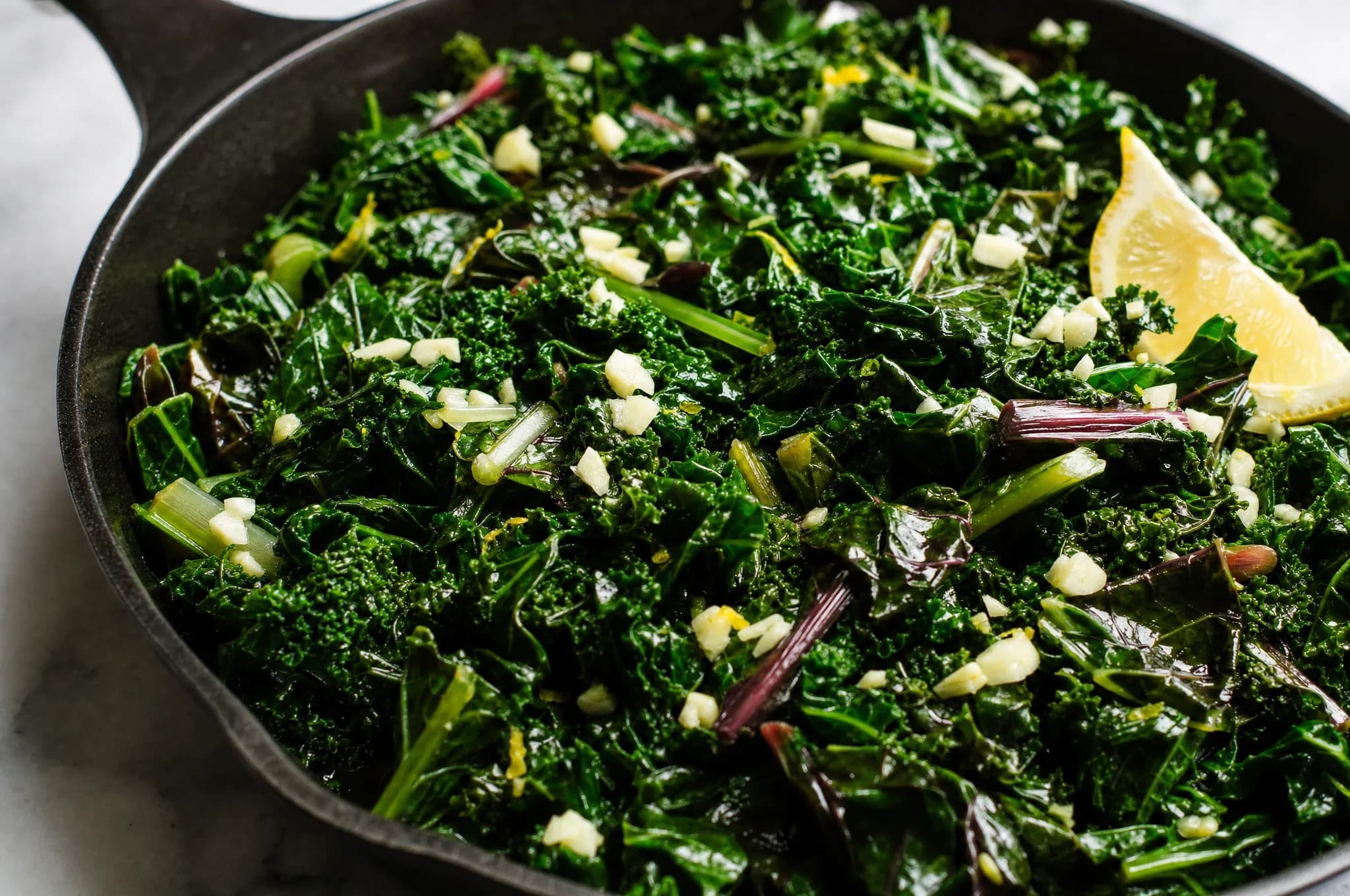
Garlicky sautéed greens is the side that makes a pile of leafy vegetables disappear off the plate. A pound of kale looks like a lot raw, but it cooks down to a modest heap in the time it takes to slice the garlic. Olive oil and a slow bloom of garlic carry the flavor, red pepper flakes add a low hum of heat, and a squeeze of lemon at the very end keeps the greens tasting bright instead of flat.
The one thing worth getting right: keep the heat at medium and pull the garlic before it colors past pale gold. Browned garlic turns bitter and drags the whole pan down with it. Greens go in the moment the garlic smells sweet, not a minute later.
Ingredients
- 1 lb kale, chard, or spinach, stems removed and leaves chopped (about 7 cups)
- 3 tablespoons olive oil
- 6 garlic cloves, thinly sliced
- 1/4 teaspoon red pepper flakes
- 1/2 teaspoon salt
- 1 tablespoon fresh lemon juice
Steps
- Warm the olive oil in a large skillet over medium heat. Add the sliced garlic and the red pepper flakes and cook 1 to 2 minutes, stirring, until the garlic turns pale gold and fragrant. Don't let it brown, or it turns bitter.
- Add the greens by the handful, tossing each batch with tongs until it wilts down enough to make room for the next. Once all the greens are in, sprinkle with the salt and cook 3 to 5 minutes, tossing now and then, until tender and glossy but still bright green.
- Pull the pan off the heat and squeeze the lemon juice over the top. Toss once and serve warm.
How it comes together
Makes 4 servings — read left to right; each column combines what's behind it.
PrepStrip the tough stems and chop the leaves so they wilt evenly; slice the garlic thin so it cooks fast without burning.
| 3 tbsp · 42 g olive oil | Bloom the garlic in oil | Finish with lemon | |
| 6 garlic clovesthinly sliced | |||
| ¼ tsp red pepper flakes | |||
| 1 lb · 455 g kale, chard, or spinachstems removed, chopped (about 7 cups) | Add the greens and wilt | ||
| ½ tsp salt | |||
| 1 tbsp · 15 g fresh lemon juice |
Scaling adjusts quantities only — cooking times and pan sizes may need judgment. Grams are rounded for the kitchen.
Notes and swaps
Kale, chard, and spinach all work, and the pan barely changes. Chard cooks faster than kale, so give it two to three minutes instead of five, and add the sliced stems a minute ahead of the leaves since they stay crisp. Spinach wilts almost on contact — a full pound collapses to a few forkfuls in about two minutes, so keep the heat moving and drain off any water it releases. Collards and mustard greens want a few extra minutes and a splash of water to steam tender.
For more depth, drop in a chopped anchovy with the garlic or finish with a spoon of toasted pine nuts. A grating of lemon zest alongside the juice sharpens it further. Leftovers fold into eggs, grain bowls, or a soup the next day without missing a beat.
The macros here are an estimate for one of four sides. Tell MIND Diet Companion "kale sautéed in olive oil with garlic" and it logs the leafy-greens and olive-oil groups the plate covers, so you can see how the day tracks against the MIND pattern.
FAQ
Which greens are best for this? Kale holds its shape and stays a little chewy, chard is tender and mild, and spinach turns silky and cooks fastest. All three take the same garlic-and-oil treatment; just adjust the cooking time down as the leaves get more delicate.
How do I keep the garlic from burning? Slice it thin, start it in cool oil over medium heat, and watch for the color to shift to pale gold. Pull it back or add the greens the second it smells sweet. Burnt garlic goes bitter fast, so err on the early side.
Can I make it ahead? Sautéed greens keep three to four days in the fridge and reheat in a hot pan in a minute. They also fold cold into a grain bowl or an omelet, so cook a big batch and pull from it through the week.
My greens turned watery — what happened? Spinach and chard release water as they wilt. Cook over medium-high once the greens are in, toss often, and tip out any liquid that pools so the greens sauté rather than steam.
Why lemon at the end and not the start? Acid added early dulls the color and can toughen the leaves. Squeezed on off the heat, the lemon stays bright and lifts the whole pan. New to a recipe laid out this way? Here is how to read a recipe at a glance.