Nordic baked mackerel with lemon and dill
October 3, 2026 · 3 min read
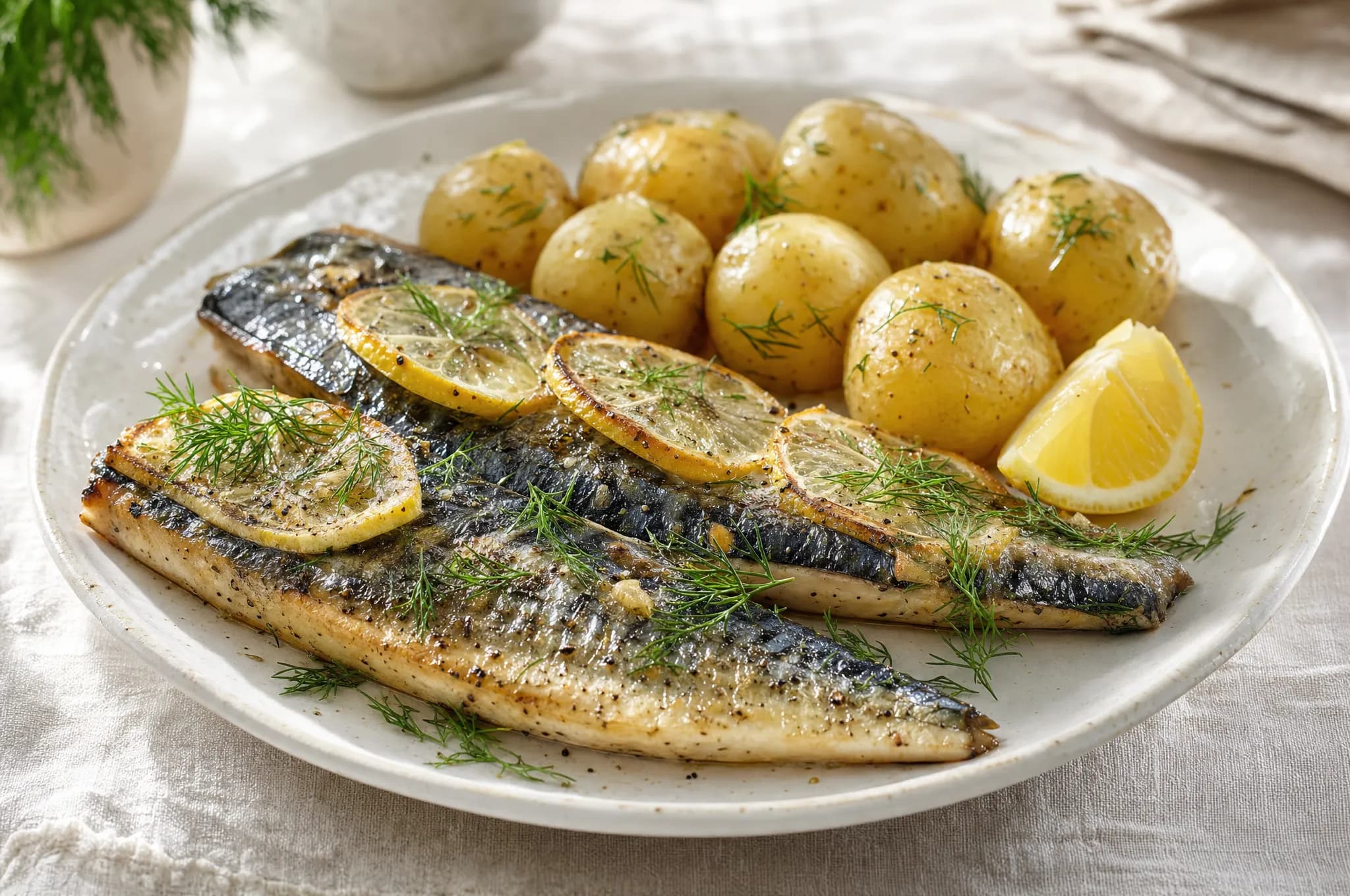
Mackerel is the fish the Nordic kitchen reaches for when it wants something rich. It's an oily fish, so it bakes up moist with crisp skin and needs little more than lemon, garlic, and dill to taste like a proper dinner. New potatoes on the side make it a full plate in about half an hour, most of that hands-off in the oven.
The skin is the best part when it crisps, and that comes down to one move: dry it well and score it before it goes in hot.
Ingredients
- 4 mackerel fillets (about 5 oz each)
- 1 lb new potatoes, halved if large
- 1 tablespoon rapeseed (canola) oil
- 2 cloves garlic, minced
- Salt, to taste
- Black pepper, to taste
- 1 lemon, half sliced and half in wedges
- Small bunch fresh dill, chopped
- 1 tablespoon butter, for the potatoes
Steps
- Boil the new potatoes in salted water until tender, 15 to 18 minutes, then drain and keep warm.
- Heat the oven to 425°F. Pat the mackerel fillets very dry, score the skin lightly, and lay them skin-up on an oiled baking tray.
- Rub the fillets with the rapeseed oil and garlic, season with salt and pepper, and lay the lemon slices over the top.
- Bake 10 to 12 minutes, until the flesh is opaque and the skin has crisped. Run them under the broiler for the last 2 minutes if you want more color.
- Toss the warm potatoes with the butter and half the dill. Serve with the mackerel, the rest of the dill, and lemon wedges.
How it comes together
Makes 4 servings — read left to right; each column combines what's behind it.
PrepPat the mackerel very dry and score the skin — dry skin under a hot oven is what crisps instead of steaming.
| 1 lb · 455 g new potatoeshalved if large | Boil the potatoes | |||
| 4 mackerel filletsesabout 5 oz each | Prep the mackerel | |||
| 1 tbsp · 14 g rapeseed (canola) oil | Season and top | |||
| 2 cloveses · 6 g garlicminced | ||||
| saltto taste | ||||
| black pepperto taste | ||||
| 1 lemonhalf sliced, half in wedges | ||||
| fresh dillsmall bunch, chopped | Finish and serve | |||
| 1 tbsp · 14 g butterfor the potatoes |
Scaling adjusts quantities only — cooking times and pan sizes may need judgment. Grams are rounded for the kitchen.
Notes and swaps
Herring, sardines, or trout stand in for the mackerel — all oily fish that take the same lemon-and-dill treatment. A spoon of Dijon or horseradish rubbed on before baking cuts the richness if mackerel tastes too strong for you. Swap the potatoes for a cucumber salad or braised cabbage to keep it lighter. Frozen fillets work fine; thaw them fully and pat them dry, since surface water is the enemy of crisp skin.
Fresh mackerel spoils faster than most fish, so cook it the day you buy it and give it a good sniff first — it should smell of clean sea, not much else.
Tell Nordic Diet Companion "baked mackerel with new potatoes and dill" and it logs the oily fish against your week's pattern, no weighing or label-reading.
FAQ
How often does the Nordic diet include oily fish? Fish features a few times a week in the pattern, and oily fish like mackerel, herring, and salmon are among its defining foods. Rotating them keeps the week varied.
Do I have to score the skin? It helps. Shallow cuts let heat and seasoning in and stop the skin from curling, which is what gives you an even, crisp finish. Skip it and the fish still tastes good, just softer-skinned.
Can I use frozen mackerel? Yes. Thaw it fully in the fridge and pat it very dry before baking — any surface water steams the skin instead of crisping it.
Mackerel tastes too strong to me. What helps? Acid and herbs. Plenty of lemon, a rub of Dijon or horseradish, and fresh dill all balance the richness. Serving it hot rather than cold helps too.
What else goes on the plate? New potatoes, a sharp cucumber salad, pickled beets, or braised red cabbage are all classic. For another oily-fish night, baked trout with dill uses the same approach, and the Nordic fish guide covers which fish to keep in rotation.