Best ketone meter: blood vs. breath vs. urine
August 9, 2026 · 8 min read
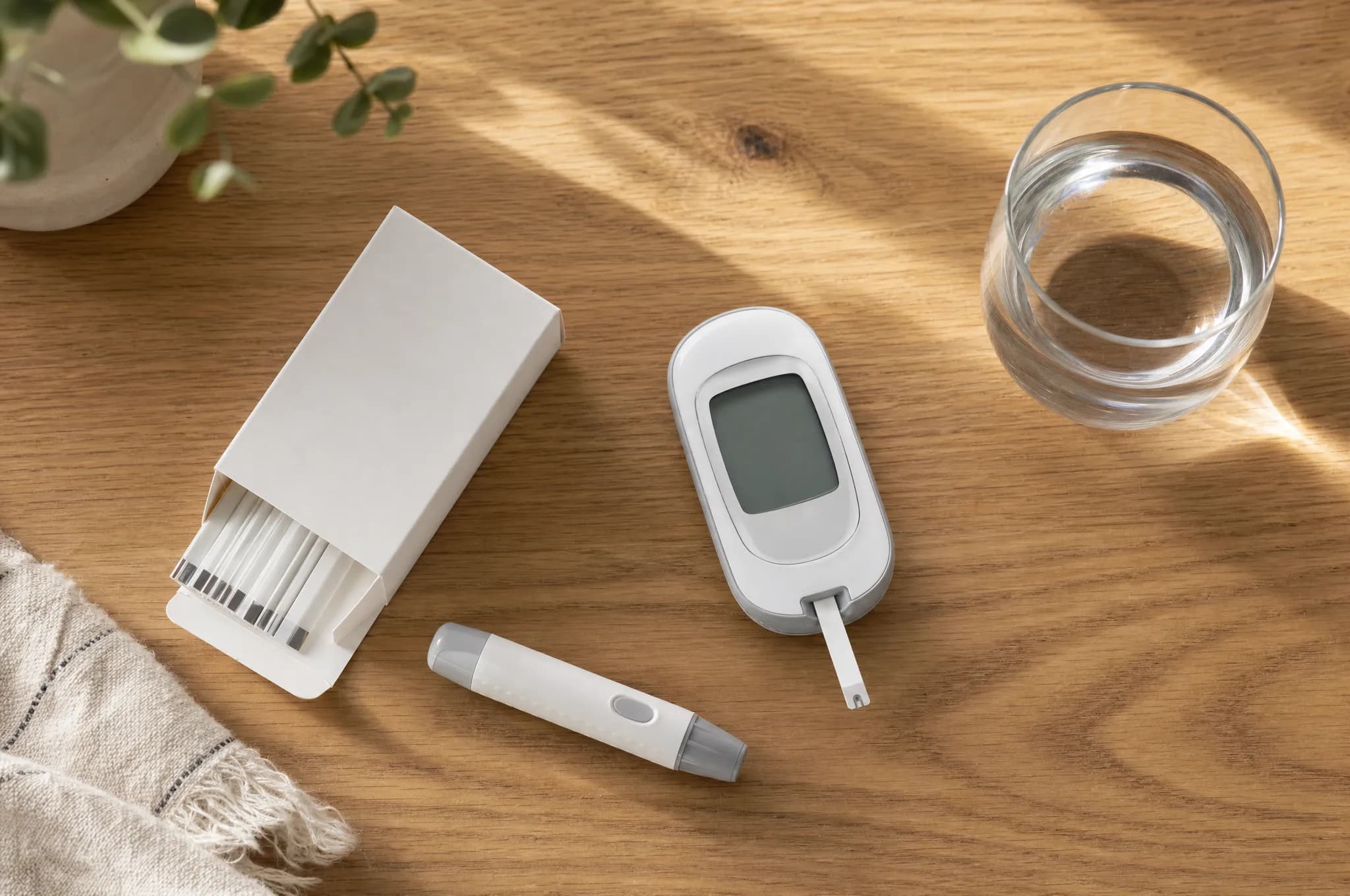
If you want the short version: a blood ketone meter is the most accurate, and it's what to buy if you're going to test seriously. Urine strips are the cheapest way to start and fine for your first few weeks. Breath meters are reusable and strip-free, but there's no device worth a firm recommendation right now. Which one is right comes down to how often you'll test and why.
Some links here point to our favorite keto products, which use affiliate links — if you buy through one we may earn a small commission at no extra cost to you. It never changes our picks.
The three methods at a glance
| Method | Measures | Accuracy | Cost shape | Reusable | Best for |
|---|---|---|---|---|---|
| Blood | BHB | Highest | Cheap meter, ongoing strips | No — one strip per test | Accuracy; anyone testing regularly |
| Urine | Acetoacetate | Good early, fades with adaptation | Cheapest overall | No — one strip per test | Beginners confirming ketosis |
| Breath | Acetone | Moderate; no strips to run out of | Device up front, nothing ongoing | Yes | Frequent testers who hate strips — once a good device exists |
The three tests don't measure the same thing, which is the key to understanding why their numbers never match. Blood meters read beta-hydroxybutyrate (BHB), the ketone your body actually runs on. Urine strips detect acetoacetate, a ketone you spill early and less of once you're adapted. Breath meters read acetone, a byproduct you exhale. All three are real signals of ketosis — they just trade accuracy against cost and convenience differently. Our research on ketone testing gathers the accuracy studies behind each.
Blood ketone meters — the most accurate
A blood meter is a finger-prick reading, the same format as a glucose meter, and it measures BHB directly. That's why it's the gold standard: the number on the screen is the ketone level in your blood at that moment, not an indirect proxy. Many meters (including the common pick) read both ketones and glucose from the same device, which lets you track your glucose-ketone index if you want a single fasting-and-fat-adaptation number.
The catch is the ongoing cost. The meter itself is cheap; the strips are where the money goes, one per test. That's fine if you test occasionally and expensive if you test three times a day.
- Pros: most accurate; measures the ketone that matters (BHB); often reads glucose too.
- Cons: finger pricks; strips are an ongoing cost; the least convenient in the moment.
- Best for: anyone who wants a real number they can trust, and anyone testing for a specific reason rather than curiosity.
The pick: the Keto-Mojo GK+ is the meter most people land on — Bluetooth, reads glucose and ketones, widely available strips. It's the blood option in our favorite keto products.
Urine strips — the cheapest way to start
Urine strips are how most people first check whether keto is "working." You dip a strip, wait, and read the color against the chart. They detect acetoacetate, which your body dumps into urine generously in the early days of cutting carbs — so a bright strip in week one is genuinely encouraging.
The honest limitation: as you fat-adapt over a few weeks, your body gets better at using ketones and spills less acetoacetate, so the strips fade even while you're deeper in ketosis than ever. A pale strip after a month isn't failure; it often means adaptation. That's why urine strips are a great starter and a poor long-term gauge.
- Pros: cheapest by far; no finger prick; instant reassurance early on.
- Cons: accuracy fades with adaptation; affected by hydration; qualitative, not a precise number.
- Best for: beginners in the first few weeks who just want to confirm they're in ketosis.
The pick: a basic box of ketone urine strips does the job — the Perfect Keto strips are the urine option on our picks page. Any reputable brand is essentially the same test.
Breath meters — reusable, but no standout right now
A breath meter reads acetone, which correlates reasonably well with blood ketones, and its big appeal is that it's reusable with no strips — buy the device once, breathe into it as often as you like, no ongoing cost or finger pricks. On paper it's the most convenient of the three.
The problem is the market. The device that earned the strongest recommendations, Biosense, was discontinued in 2024, and nothing has cleanly replaced it. There are still breath meters on sale, but none we'd point you to with confidence today. So we cover breath as a method — because it's a legitimate one — without naming a device pick. If a solid breath meter lands, it becomes the easy answer for frequent testers. Until then, it's a watch-this-space. More on how it compares in our breath ketone meter breakdown.
- Pros: reusable, no strips, no blood; unlimited testing once you own it.
- Cons: no standout device right now; moderate accuracy; readings shift with alcohol and some foods.
- Best for: people who'll test often and hate strips — once the hardware catches up.
Which should you buy?
- Most people, best overall → a blood meter. If you're only going to buy one, buy the blood meter. It's the number you can trust, and testing occasionally keeps the strip cost low.
- Cheapest start, just confirming ketosis → urine strips. Perfect for the first month. Expect them to fade as you adapt, and don't read that as backsliding.
- You test constantly and hate strips → breath, eventually. The method fits you; the current devices don't earn a recommendation yet.
- You're testing for a medical reason → a blood meter, and loop in your doctor. Therapeutic ketogenic protocols call for the accuracy of blood, and they're a medical matter, not a gadget choice.
You'll find all of these — the blood meter and the urine strips — in the testing section of our favorite keto products.
Do you even need to test?
Worth saying plainly: most people don't need to test at all, and almost nobody needs to test daily forever. Testing answers a specific question — am I in ketosis? — and once you've confirmed the answer a few times and know what your keto meals feel like, the strips tend to sit in a drawer. Test when you're starting out, when you change your approach, or when you're curious. Otherwise, eat the way that keeps you there and let the results speak.
Where testing does earn its keep is in spotting patterns over time, and that's easier when the readings live next to your food. Copper Keto Companion logs your ketone numbers alongside what you actually ate, so a single reading becomes a trend you can see — no spreadsheet, no separate app.
FAQ
What's the most accurate ketone meter? A blood ketone meter. It measures BHB — the ketone your body uses for fuel — directly from a drop of blood, which is why it's the reference standard. Urine and breath tests measure different molecules (acetoacetate and acetone) and are less precise.
Why don't my blood, urine, and breath readings match? Because they measure three different ketones on three different scales. A blood meter gives an mmol/L number for BHB; urine strips show a color for acetoacetate; breath meters read acetone. They can all say "in ketosis" while showing very different-looking results. For what the blood numbers mean, see our ketone levels chart.
Do breath ketone meters actually work? Yes — acetone in your breath tracks reasonably well with blood ketones, and a breath meter is reusable with no strips. The issue isn't the science; it's that there's no standout device to recommend right now after Biosense was discontinued.
How often should I test? For most people, occasionally — when starting keto, after a change, or out of curiosity. Daily testing is rarely necessary and gets expensive with blood strips.
Where do I start if I'm brand new? Read how to test for ketosis for the full walkthrough, then grab a box of urine strips to confirm you're in ketosis your first few weeks. Move to a blood meter only if you want precise numbers.
Ready to pick one? See the testing section of our favorite keto products, or start with the keto guide if you're new to low-carb eating.